- My First Australian Offer
- Posts
- The Ultimate Interview Bible (Backed by 300+ offers)
The Ultimate Interview Bible (Backed by 300+ offers)
Part 1: First impression, research, and sample answers to most frequently asked questions.

Utkarsh Manocha
October 30, 2025
This guide is divided into two parts.
Across both, I’ve pulled together everything I’ve learned from being on both sides of the table, giving and taking over 30 interviews across consulting, tech, and government.
I’ve run more than 500 mock interviews that have resulted in over 300 job offers over the last 2 years.
The interview prep approach I’ve shared in this newsletter is the same we use within My First Australian Offer.
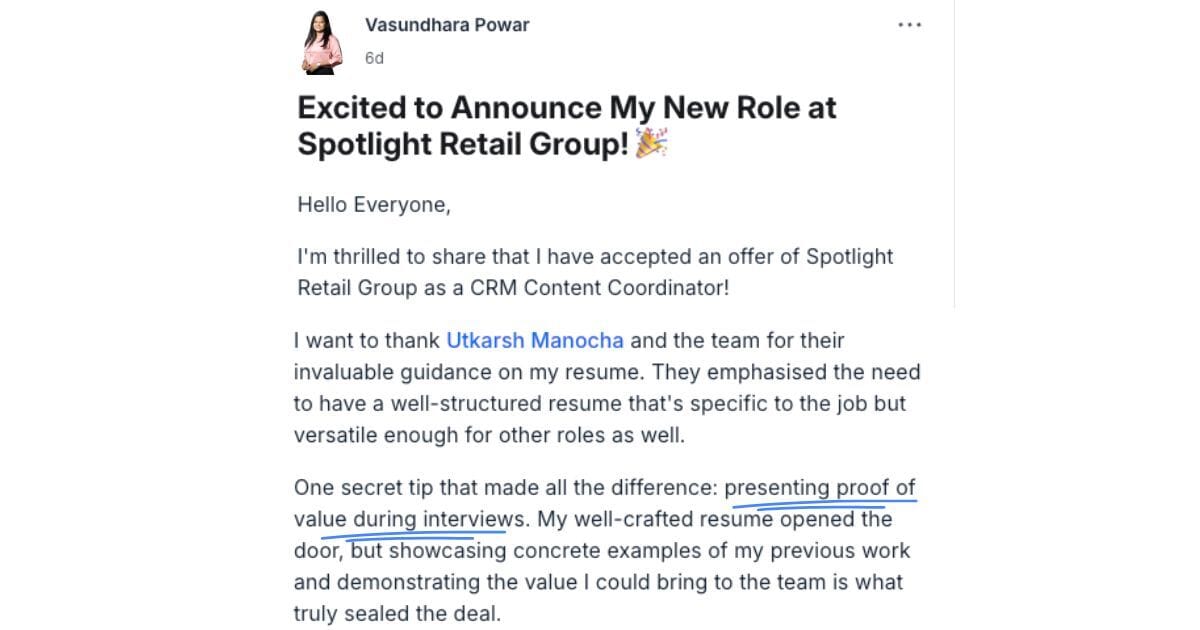
There are more interview formats today than ever before. Phone, video, panel, one-way interviews, case studies, and assessment centres.
But when I speak with graduate program managers and hiring leads from companies like Amazon, Capgemini, Deloitte, and others, one thing that always stands out is that interviewers today, are still asking themselves the same two questions they were asking 20 years ago.
Can this person actually do the job, and do it well? (Competence)
Would I want to work with this person every day? (Likability)
In the simplest of terms, our goal is to get 2 yeses to these two questions.
The Science of Interviewing
Interviews aren’t as rational as we think.
There’s science behind how humans make decisions. When it comes to interviews, there are 2 concepts you need to know about:
1) Thin slicing (first impressions)
According to research published in the Journal of Occupational and Organisational Psychology, interviewers typically make their decision within the first 7-30 seconds of meeting a candidate. The rest of the interview is spent looking for evidence to confirm that initial impression.
2) Peak end rule
Nobel laureate Daniel Kahneman came up with this study that proved people don’t remember experiences in full. When they recall an experience, they are more likely to remember the peak (the most intense moment) and the end.
What does that mean for your upcoming interview?
The start, the peak, and the way you end the interview carry far more weight than everything in between.
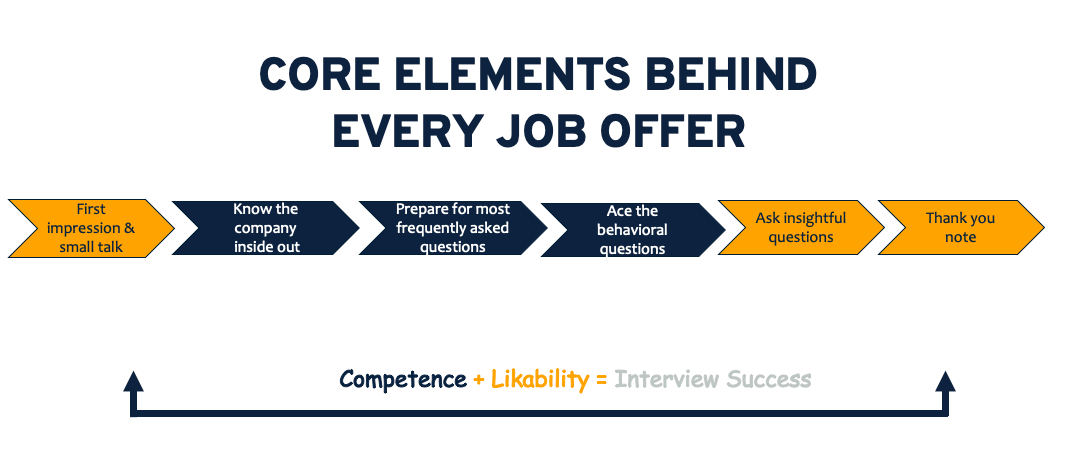
In this guide, we’ll focus on the first 3 elements: first impressions, research, and frequently asked questions.
I’m writing another edition to go deeper into behavioural questions, asking good questions, and thank-you notes.
Small Talk
Across every one of the 30+ interviews I’ve given and taken in Australia, they’ve all started the same way:
“How are you going?” or “How has your day been so far?”
It sounds casual, but this is where you start building likability.
Step 1: Start strong
Most candidates treat this as an irrelevant moment and move past it very quickly. They’ll say things like:
“Good, thanks.” (Too flat.)
“Not too bad.” (Too negative.)
But this is your first chance to set the tone.
Be warm, thank them for their time, and show genuine enthusiasm for the conversation ahead.
“I’m doing great, thanks. I really appreciate you taking the time to speak with me today. Been looking forward to learning more about the role and your team.”
Once the small talk is done, you have a short window to double down on your positive impression.
Share a short, relevant story that shows your curiosity, confidence, and that you’ve done your homework.
Keep it under 30 seconds, and make sure it connects to their work or values.
Example:
“In doing my research, I came across your sustainability report yesterday. The framework mentioned in there was the exact one I used at Equip to recommend strategies to reduce food and packaging wastage.”
It’s short, specific, and bound to move the conversation forward.
Step 3: Trigger instant likability
Here are two other cues that make the biggest difference:
Use their name early
People naturally pay more attention when they hear their own name. You don’t need to overuse it — once early in the conversation is enough.
For example:
“Thanks for having me, Sarah. I’ve been really looking forward to this chat.”
Match their energy
In simple terms, you want to mirror how the interviewer carries themselves because people naturally connect with those who make them feel comfortable.
If they’re warm and chatty, keep the energy up. If they’re calm and straight to the point, match that tone.
Researching Beyond the Company Website
Anyone can read a company’s “About Us” page. The candidates who stand out are the ones who go deeper. Here’s how to do it properly.
Step 1: Decode the job
Reading the job description once isn’t enough. You need to know it so well that the key phrases naturally show up in your answers.
Most job ads list eight to ten responsibilities, but if you look closely, they usually point to just two or three core themes that you’ll spend 80% of your time doing.
Highlight the skills, tools, or values that keep repeating. This is what matters most to the interviewer.
And remember, doing research and showing research are two different things.
Anyone can read a job ad, but the candidate who uses the same language the company does, their phrasing, their focus areas, their tone, comes across as someone who already understands how they work.
That’s how you sound like an insider before you even get the job.
Step 2: Understand the business, not just the brand
You want to understand three things:
What the company actually does, and how they make money
Who their competitors are and where they fit in the market
What’s happening right now — new products, reports, or press releases.
Here are a few places most candidates never think to check:
LinkedIn Company Page: Who are they hiring? What are they celebrating? What’s the tone they use?
Employee profiles of people in similar roles: What’s their background?
What tools or systems do they mention?External Mentions and Forums: Reddit, Glassdoor, and X can tell you a lot about leadership style, challenges, and how people describe the company.

Advice I got from a NSW Government Hiring Manager
Mastering Most Frequently Asked Questions

Question: Tell us about yourself
The best and easiest way to answer this question is with the Present–Past–Future framework.
Part 1: Present (30-45 seconds)
Start with what you’re doing now and what you’re good at. Talk about:
Your current role and key responsibilities
A recent accomplishment that connects to the position you’re interviewing for
A quick line of context about your current company
For Example:
“I’m a digital marketing analyst with 2 years of experience helping brands grow through data-driven campaigns.
Currently, I work at a DNX, a digital agency where I manage campaigns for 4 clients across retail, education, and technology.
Recently, I led a multi-channel campaign that increased lead conversions by 25% within six weeks for a SAAS start-up in Sydney. As part of that, I developed the strategy, managed execution across Google Ads, Meta, LinkedIn, and email marketing, and used performance data to refine audience targeting and budget allocation.”
Part 2: Past (30-45 seconds)
Next, explain how you got here. Talk about:
The most relevant parts of your previous experience
Key skills you’ve developed that are useful for this role
A sense of your career progression
Example:
“My marketing career started at Ogilvy, where I learned how to translate creative ideas into measurable results.
My favourite part about that role was using data to understand what actually drives consumer behaviour. This led me to move to Australia to pursue my Master’s in marketing.
During my time at university, I worked as a marketing assistant with FinBridge Finance, where I managed content and performance campaigns that improved customer sign-ups for their SME lending division.”
Part 3: Future (15-30 seconds)
Finally, connect it back to why you’re here today. Talk about:
What you’re looking for next
Why this role or company caught your attention
What you’re excited to contribute
Example:
“I’ve been following Spark Group ever since my first semester. From what I’ve learned about this role, it requires someone who can blend the creative side of marketing with the analytical side of decision-making. That’s what I love doing. When I saw the job ad, I just knew I had to apply.”
Most common mistake
The most common mistake people make is using the same “Tell me about yourself” answer for every company.
The way you introduce yourself should change based on the role.
If the position focuses on client management and event coordination, there’s no point leading with your email marketing achievements.
If the role is more about campaign analytics and reporting, skip the long story about creative brainstorming.
Your introduction sets the stage for the rest of the interview. Make sure it’s relevant to what they care about, not just what you’ve done.
Question: Why should we hire you?
This is the opportunity to connect everything you’ve researched and understood about the role, with your achievements and frame it in one clear answer.
Here’s a simple three-part structure for this.
Part 1: Show you’ve done your research
Mention 2 specific things you found in your research or in the position description.
For example:
A focus area mentioned multiple times in the job ad (like campaign analytics or client relationship management).
A recent company initiative, product launch, or direction you noticed while researching.
Part 2: Link your experience to what they need
Once you’ve highlighted what matters to them, connect your experience directly to it.
Pick results or examples that prove you’ve done something similar and can deliver again in this new context.
You’re essentially saying, “I’ve already solved the kind of problems you’re hiring for.”
Part 3: Highlight what makes you different
Finally, finish strong by sharing what makes you a good fit: your unique mix of skills, your approach to problem-solving, or the mindset you bring to the table.
This is your Unique Selling Proposition, so while it doesn’t have to be flashy, it needs to be memorable.
Example:
“From my reading of the position description and my research about your company, I noticed two key priorities: scaling digital campaigns across multiple channels and improving lead-quality tracking through better analytics. I have 3 years of experience with both, and I feel that’s what makes me a good fit.
In my current role at DNX, I’ve led marketing campaigns for clients in the retail, education, and tech sectors. Recently, I managed a SaaS client campaign where I built and executed a multi-channel strategy across Google Ads, Meta, LinkedIn, and email. I tested messaging weekly, refined audience segments through performance data, and increased qualified leads by 25 percent in six weeks.
This is where I feel my approach sets me apart. I try and make data the central point of every decision. I measure what’s working, iterate on what’s not, and optimise until the campaign delivers scalable results.
Common mistake: Talking about company culture and values
Most candidates answer this question by saying, “I really connect with your company’s culture and values.” That’s not what the interviewer is looking for.
Everyone could say that, and you could say the same thing in 50 other interviews.
They already know their culture is great. They want to know how you’ll add value.
Question: Why do you want to work here?
Our framework for this question is very similar to “Why should we hire you?”
But here, the focus shifts from skills to purpose.
Start by mentioning something specific about a campaign, project, product launch or initiative that genuinely caught your attention.
Then, link it back to your own experience or motivation.
The goal isn’t to flatter the company; it’s to show that your values and their mission actually align.
What drew me to your agency was the campaign your ran for GreenPath. The way you brought together storytelling and community involvement felt genuine, and I got that it wasn’t just about driving engagement, it actually created impact in the society.
I’m really drawn to the kind of work your team does as it feels thoughtful and community driven. I’ve worked on similar projects where we saw a 65% lift in engagement by putting people and purpose at the centre of the strategy. That experience showed me how meaningful campaigns can make a real difference.
This is where I want to grow, which is why I feel this opportunity is great for me.
Common Mistake: Turning it into a sales pitch
This question is about alignment, not persuasion.
You don’t need to sell yourself again. You need to show that you’ve thought about what you want and how this company fits into that.
Focus on what genuinely draws you in: the kind of work they do, their impact, or the values they represent.
The only way you’ll be able to do that is if you’ve taken the time to genuinely research about this company.
Question: Are you on a visa? When is that valid till?
Before we get into how to answer this, there’s something important to understand about employers.
Almost every employer including ASX 200 companies, government departments, small businesses, even the most “risk-loving” start-ups, is risk-averse when it comes to hiring.
Most of them don’t fully understand visas. So until it becomes necessary, we only want to share what’s relevant, and nothing more.
Scenario 1: “Do you have full-time work rights in Australia?”
This is one of the very few questions where I’ll tell you to answer with a simple yes or no.
“Yes, I can work at full-time capacity immediately.”
That’s all you need to say.
No extra details, no visa category, no expiry date. You’re answering the question truthfully, and staying focused on what matters to them.
They will ask you a follow up question if they need more information from you.
Scenario 2: “Can you tell us more about what visa you’re on and when is that valid till?”
I’m on a post-study work visa, which is a long-term visa valid until 2028 that allows me to work full-time. During this time, I also plan to apply for permanent residency, as I see my long-term future in Australia and want to continue building my career here. Is my visa going to be a concern from a business standpoint?
Question: What are your salary expectations?
This question makes a lot of people tense up.
It feels like a trap. Say too little and you undersell yourself, say too much and you might knock yourself out of contention.
Here’s how to answer it well:
Step 1: Build your evidence
Before you walk into any interview, you need proof that the number you’re aiming for actually aligns with what people with a similar background are earning.
Look up salary data for comparable roles in your city. Check Seek, Glassdoor, and Hays Salary Guide for that.
Something that’s even better than that is talk to recruiters and peers who’ve recently been through the hiring process.
This evidence helps us talk about money confidently, instead of relying on guesswork.
Step 2: Give a range, not a number
When you’re asked about salary, avoid jumping straight to a single figure. It feels direct, but it actually puts you at a disadvantage.
If your number is lower than what they’ve budgeted, you leave money on the table. If it’s higher, you risk pricing yourself out before they’ve seen your full value.
That’s why a range is smarter. It gives us flexibility and keeps the conversation open.
“Based on my research for similar marketing roles in Sydney, and with my level of experience, I’m looking at something in the range of $80,000 to $95,000.”
Step 3: End with a question
This is the part most people skip, but this is what makes it a discussion.
Once you’ve shared your salary range, ask this question to shift things from “here’s a number - take it or leave it” to “let’s discuss this together.”
“Does that align with what you’ve got budgeted for the role?”
To me, that’s a very smart question to ask.
Without asking it, you’re still guessing whether the number you gave actually aligned or not. With it, you keep the conversation open and give yourself the space to adjust if their budget is lower.

Utkarsh Manocha
That brings us to the end of this newsletter, and the 1st part of our Ultimate Interview Bible. I’ll be publishing the second part in the next couple of weeks.
Your first Australian offer is only a few months away from you. Reach out if you need any help with your interview prep.
Here’s how to stay in the loop:
Catch me on LinkedIn: It's where I say the things I don't have room for in newsletters.
Share this with a friend who’d vibe with it.
If this landed in your inbox via a friend, subscribe here. It’s free, and I only send two a month. No spamming, pinky promise
Job hunting in Australia? Check out My First Australian Offer, it’s my job search program + community for grads, internationals, and anyone trying to get hired (and paid).
Want to collab or bring me in as a speaker? Just reach out here.